
Chimney Cap vs Chimney Crown vs Chase Cover
Key Takeaways
- A chimney cap covers the flue opening; a crown covers the top of a masonry chimney; a chase cover covers the top of a framed prefab chase.
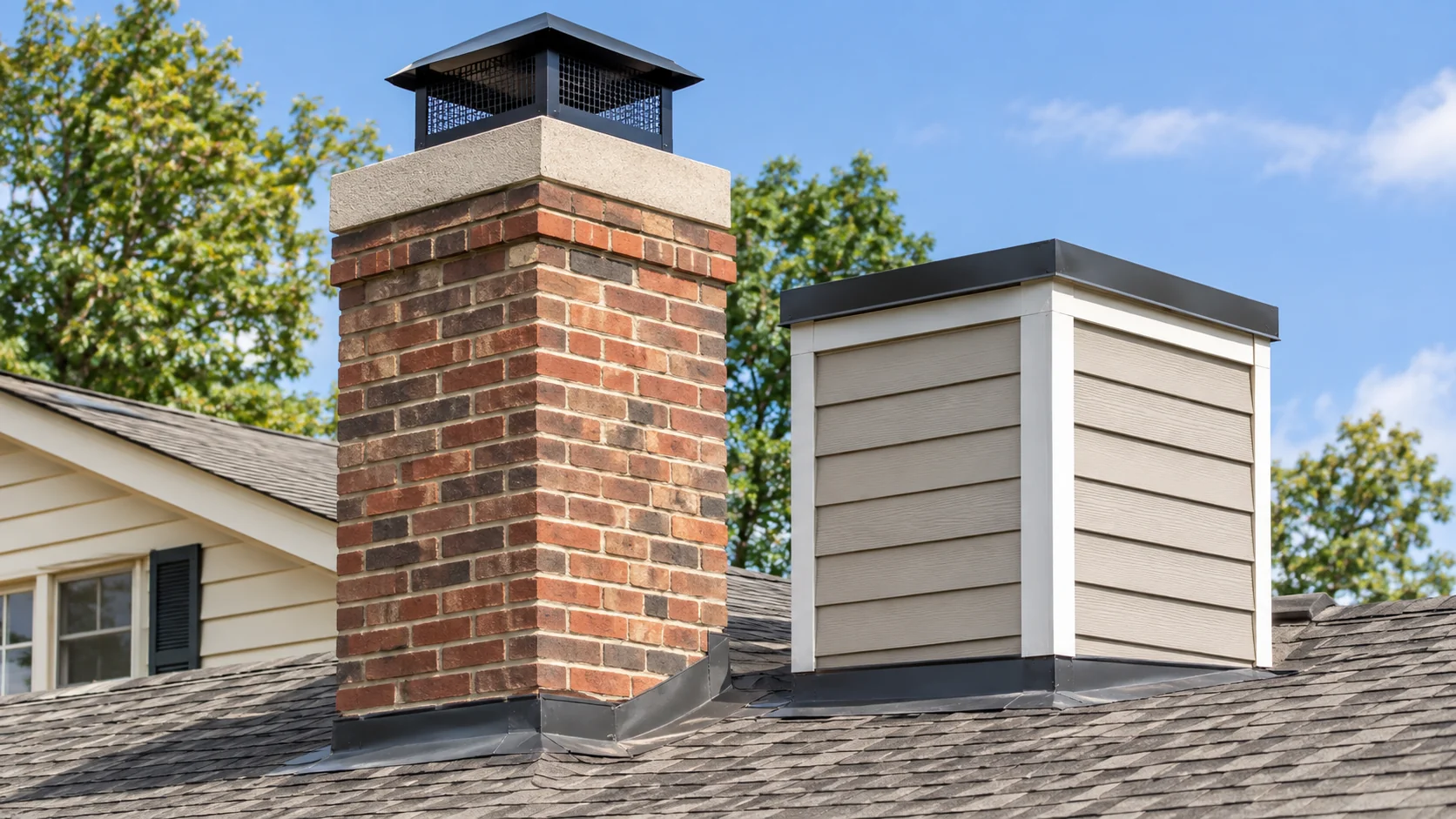
- Masonry chimneys need a crown and a cap; prefab chimneys need a chase cover and the listed cap.
- Crowns fail by cracking; chase covers fail by rusting and pooling water; caps fail by rusting, clogging or blowing off.
- A multi flue cap can protect the crown as well as the flues.
Three parts sit at the top of most chimneys, and the names get mixed up all the time: the chimney cap, the chimney crown and the chase cover. They do different jobs. Knowing which is which helps you spot problems and buy the right part.
The Quick Answer
| Chimney cap | Chimney crown | Chase cover | |
|---|---|---|---|
| What it covers | Flue opening | Top of masonry chimney | Top of framed chase |
| Chimney type | Masonry and prefab | Masonry only | Prefab only |
| Material | Stainless, copper, galvanized | Concrete or mortar | Stainless, galvanized, aluminum, copper |
| Job | Keep rain, animals, debris out of flue | Shed water off the brick | Shed water off the chase |
| Common failure | Rust, clogging, blowing off | Cracking | Rust, sagging, pooling water |
What Is a Chimney Cap?
A chimney cap is the metal hood over the flue. It has a lid to keep rain out and mesh sides to keep animals and debris out and, on spark arrestor models, embers in. Single flue caps fit one tile; multi flue caps cover several flues and often the crown too.
What Is a Chimney Crown?
The crown is the slab across the top of a brick or stone chimney. The flue tiles poke up through it. It should slope away from the flues and overhang the brick so water drips clear of the chimney face.
How Crowns Fail
- Cracking: many crowns are built from mortar rather than proper concrete, and crack within a few years.
- Freeze thaw damage: water enters cracks, freezes and widens them.
- No overhang: water runs down the brick and soaks in.
- Bonded to the tile: the tile and crown expand at different rates and crack each other.
Fixes
- Seal small cracks with a crown sealer.
- Rebuild badly damaged crowns with a proper cast concrete design.
- Fit a multi flue cap that covers the crown.
What Is a Chase Cover?
A chase is the wood framed box, sided like the house, that encloses a factory built metal chimney. The chase cover is the metal panel on top. The flue pipe passes through a hole in it, sealed by a storm collar, and the chimney cap sits on top of the pipe.
How Chase Covers Fail
- Rust: galvanized covers rust, and brown streaks run down the siding.
- Flat or sagging tops: water pools and finds its way in.
- Failed storm collar seal: water runs down the pipe.
Fixes
- Replace a rusted cover with stainless, ideally with a cross break or raised center so water runs off.
- Reseal the storm collar.
- Make sure the cover has a drip edge.
Does Every Chimney Need All Three?
- Masonry chimney: crown and cap. No chase cover.
- Prefab chimney in a chase: chase cover and the listed cap. No crown.
- Prefab chimney without a chase (pipe through the roof): only the listed cap, plus flashing and storm collar.
Which One Is Leaking?
| Where water appears | Likely source |
|---|---|
| Firebox, with a good cap | Crown cracks |
| Brown streaks on chase siding | Rusted chase cover |
| Water running down the flue pipe | Storm collar seal |
| Firebox, during wind driven rain | Cap too small or damaged |
| Ceiling beside the chimney | Flashing |
Can a Cap Replace a Crown?
No. A cap protects the flue. But a crown mounted multi flue cap covers most of the crown and protects it from rain, which can slow cracking. If the crown is already badly broken, it still needs repair.
Can a Chase Cover Replace a Cap?
No. The chase cover sheds water off the chase. The flue still needs a cap to keep rain, animals and debris out of the pipe, and the cap must be the one listed for the chimney system.
Costs
Caps and chase covers are mostly a parts and labor job. HomeGuide puts most chimney cap installations at $200 to $850. Crown repair varies widely depending on whether it is sealed or rebuilt, so get quotes from a sweep or mason.
Inspecting All Three
During the yearly chimney inspection NFPA 211 recommends, ask the sweep to check:
- Cap: rust, mesh, fit, fasteners.
- Crown: cracks, overhang, slope.
- Chase cover: rust, shape, storm collar seal.
How Each Part Is Built
Chimney Cap Construction
A typical cap has three parts:
- Lid or hood that sheds rain.
- Mesh screen on the sides.
- Base or legs that attach to the flue tile or crown.
Single flue caps clamp to the outside of the flue tile with bolts or a band. Multi flue caps sit on the crown and are fastened into the masonry or held by brackets.
Chimney Crown Construction
A good crown:
- Is cast from concrete, not mixed from mortar.
- Slopes down and away from the flue tiles.
- Overhangs the brick by a couple of inches with a drip edge cut underneath.
- Has a small gap or bond break around the flue tile so the two can expand separately.
Many older crowns are just a thin layer of mortar troweled across the top. These are often called mortar washes, and they crack far sooner than a cast crown.
Chase Cover Construction
A good chase cover:
- Is made from stainless, copper or heavy gauge galvanized steel.
- Has a cross break, raised center or slope so water runs off.
- Has a skirt that wraps down over the top of the chase siding with a drip edge.
- Has a raised collar around the flue hole so water cannot run straight in.
- Is sized to the exact outside dimensions of the chase.
What Each Part Costs to Fix
| Part | Typical fix | Relative cost |
|---|---|---|
| Chimney cap | Replace with correct size | Lower |
| Crown, hairline cracks | Seal | Lower |
| Crown, badly cracked | Rebuild | Higher |
| Chase cover | Replace with stainless | Moderate |
| Storm collar seal | Reseal | Lower |
Exact prices depend on access, chimney height and region. Get written quotes that describe the materials.
How Long Each Part Lasts?
- Stainless or copper cap: decades.
- Galvanized cap: much shorter, especially on wood or oil flues.
- Cast concrete crown: many years when built correctly.
- Mortar wash crown: often cracks within a few years.
- Galvanized chase cover: often rusts within a decade or so.
- Stainless chase cover: much longer, often with a lifetime warranty from the maker.
Common Mix Ups When Ordering
- Ordering a cap when the chase cover is rusted. The rust streaks on chase siding come from the cover, not the cap.
- Ordering a single flue cap for a crown with several flues. You need one cap per flue or a multi flue cap.
- Measuring the crown for a single flue cap. Single flue caps are sized to the flue tile, not the crown.
- Measuring the chase cover hole for a new cap. Prefab caps are sized to the chimney pipe and should be the listed cap for that system.
How to Inspect from the Ground
You can spot many problems with binoculars:
- Cap: tilted lid, rust, missing mesh, gaps.
- Crown: visible cracks, chunks missing, plants growing.
- Chase cover: rust streaks on siding, sagging center, gaps at the edges.
Follow up with a professional inspection if you see any of these.
Which to Fix First?
If several parts are damaged, fix in this order:
- Anything letting water into the house.
- Crown or chase cover, because water damage to masonry and framing gets worse fast.
- Cap, which you can often replace quickly.
A sweep can usually handle the cap and crown sealing in one visit, while a full crown rebuild or chase cover may need a mason or sheet metal fabricator.
Quick Summary
- Cap: metal hood over the flue. Keeps rain, animals and debris out.
- Crown: concrete slab on a masonry chimney. Sheds water off the brick.
- Chase cover: metal panel on a framed chase. Sheds water off the chase.
- Masonry chimney: needs a crown and a cap.
- Prefab chimney in a chase: needs a chase cover and the listed cap.
The Bottom Line
A chimney cap protects the flue, a crown protects the top of a masonry chimney and a chase cover protects the top of a framed chase. Masonry chimneys need a crown and a cap; prefab chimneys need a chase cover and the listed cap. When water gets in, check each part, because each fails in its own way.
Frequently asked questions
What is the difference between a chimney cap and a chimney crown?
A cap is a metal hood that covers the flue opening. A crown is the concrete or mortar slab that covers the top of the brick around the flue.
Is a chase cover the same as a chimney cap?
No. A chase cover is a metal panel covering the top of a framed chase. The chimney cap sits on top of the flue pipe that passes through it.
Do I need both a crown and a cap?
On a masonry chimney, yes. The crown protects the brick and the cap protects the flue.