
Chimney Cap Clogged With Creosote: Causes and Fixes
Key Takeaways
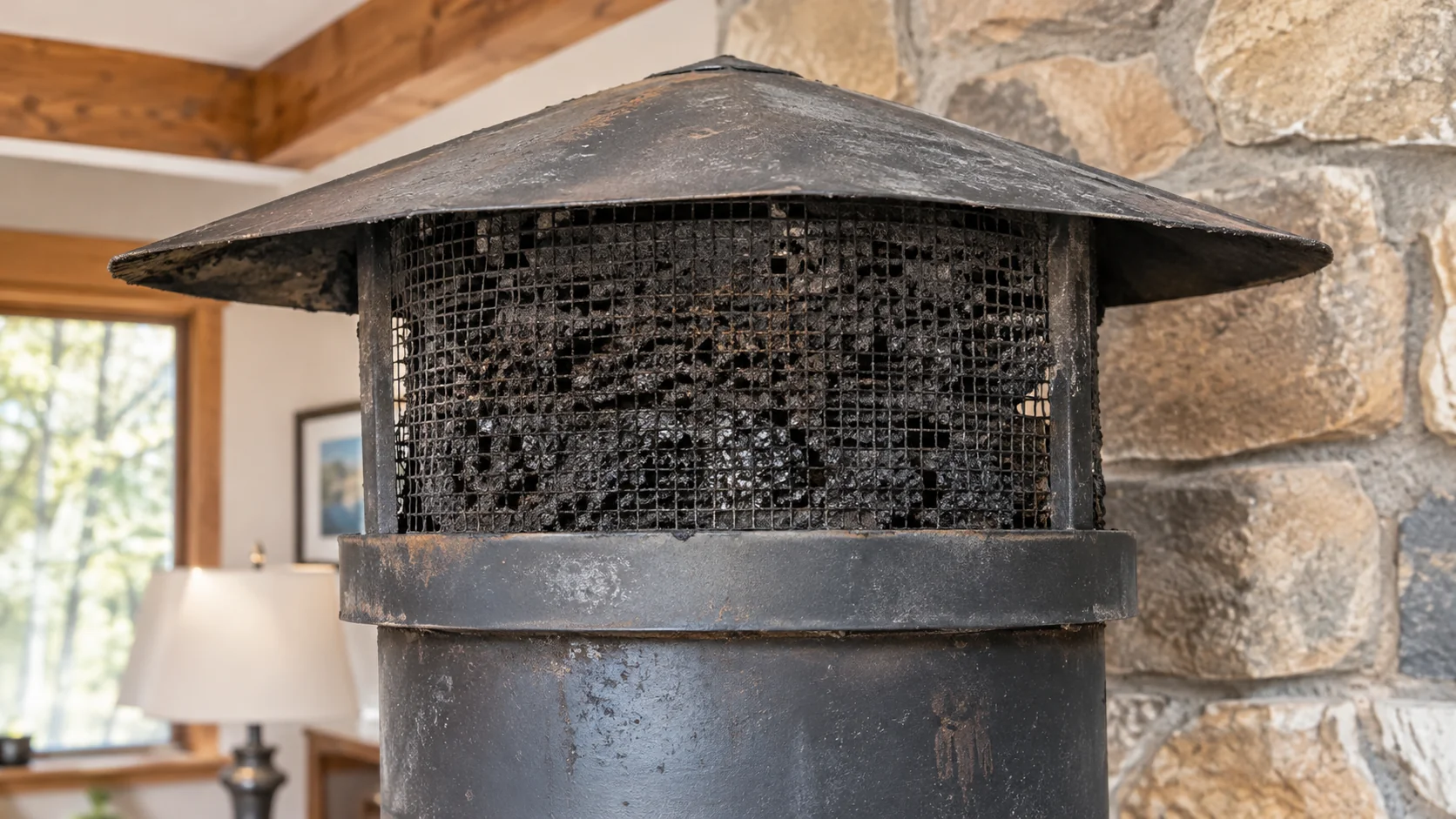
- Creosote clogs chimney caps because the mesh is the coldest metal in the chimney, so smoke condenses there first.
- Wet wood, smoldering fires and fine mesh make clogging much worse.
- Signs include smoke spilling into the room, a stove that will not draw, and black buildup visible on the cap.
- Clean the cap with the stove cold and fall protection on, and have the whole chimney swept, because a clogged cap means a dirty flue.
- Prevent it with dry wood, hotter fires, regular sweeping and a cap with a removable screen.
You light the stove and it smokes. It used to draw well, but over the last few weeks it has been getting worse. You open the door and smoke rolls into the room. There is a good chance the problem is at the very top of the chimney: a chimney cap clogged with creosote.
This is one of the most common wood stove problems, and one of the easiest to prevent once you understand why it happens.
What Is Creosote?
Creosote is the tarry residue that forms when wood smoke cools and condenses. It starts as a flaky soot, can become sticky and crunchy, and in the worst cases turns into a hard, glossy glaze. All three are flammable. Creosote is the fuel for chimney fires.
Why Chimney Caps Clog with Creosote
Smoke cools as it rises. By the time it reaches the cap, it is at its coolest, and the cap’s mesh is exposed to cold outside air. Tars and moisture condense on the mesh first. Over time, the openings narrow until smoke cannot get through freely.
What Makes It Worse
- Wet or green wood. Water in the wood cools the fire and adds steam.
- Smoldering fires. Turning the air down low for long overnight burns makes cool, smoky exhaust.
- Fine mesh. Smaller openings clog faster. Spark arrestor mesh of 1/2 inch or smaller needs more frequent cleaning than 3/4 inch.
- Oversized or unlined flues. Smoke cools too much on the way up.
- Exterior chimneys in cold climates. The flue stays cold.
- Short burns that never fully warm the flue.
Signs Your Chimney Cap Is Clogged
- Smoke in the room when lighting the fire or opening the door.
- Slow to start fires and a stove that will not get hot.
- Glass that blackens fast on a stove that used to stay clean.
- Smoke leaving the cap unevenly, or puffing from the base, seen from outside.
- Black, crusty buildup visible on the mesh through binoculars.
- A strong creosote smell in the room.
If your carbon monoxide alarm sounds, get out and call 911 or the gas company.
How to Clean a Clogged Chimney Cap
Step 1: Let the Stove Go Cold
Wait at least 24 hours after the last fire. Close the damper or stove air controls.
Step 2: Get on the Roof Safely
Use a secured ladder, soft soled shoes and a roof harness on steep or high roofs. Work in dry, calm weather. If you are not comfortable, call a chimney sweep.
Step 3: Remove the Screen or Lid
Many caps have a removable spark screen or a hinged or bolted lid. DuraVent DuraPlus caps, for example, hold the spark screen with removable screws. Removing it makes cleaning much easier.
Step 4: Brush Off the Creosote
Use a stiff nylon or stainless brush. Work from the top down. Wear gloves and eye protection. Do not use steel wool or carbon steel brushes on stainless.
Step 5: Check for Damage
Look for holes, broken wires or heat damage. Damaged mesh lets sparks through.
Step 6: Reassemble and Tighten
Refit the screen or lid and tighten every fastener.
Step 7: Have the Chimney Swept?
If the cap was clogged, the flue almost certainly has creosote too. Have the chimney swept and inspected. NFPA 211 recommends a yearly inspection and cleaning as needed.
What About Glazed Creosote?
If the buildup is shiny, hard and glassy, it is third degree or glazed creosote. It is very difficult to remove with a brush and is a serious fire risk. Leave it to a professional sweep, who has chemical treatments and tools for it.
How to Stop Your Cap Clogging Again
Burn Dry Wood
Use seasoned firewood that has dried long enough to reach a low moisture content. A moisture meter is cheap and takes the guesswork out.
Burn Hotter
Give the fire enough air to burn bright. Avoid shutting the air down to smolder for hours.
Warm the Flue
Start fires with plenty of kindling so the flue heats quickly.
Choose the Right Mesh
Use 3/4 inch mesh where your local code allows. If you must use a spark arrestor with smaller openings, plan to inspect it monthly in heating season.
Choose a Cap You Can Clean
A cap with a removable screen or lid makes routine cleaning a five minute job.
Fix the Flue
If the flue is oversized or unlined, ask a sweep about a liner sized to the stove. A properly sized, insulated liner keeps smoke warmer and reduces creosote.
Sweep Regularly
Heavy users may need sweeping more than once a season. A sweep can tell you how fast your chimney builds up creosote.
Should You Remove the Spark Screen to Stop Clogging?
No. The screen catches embers and keeps animals out, and where a spark arrestor is required, removing it breaks the rules. Instead, fix the burning habits and choose a cap that is easy to clean.
Can a Clogged Cap Cause a Chimney Fire?
Creosote on the cap can ignite if a chimney fire reaches the top or if sparks land on it. A clogged cap also slows draft, which makes fires burn cooler and smokier, creating more creosote. It is a cycle worth breaking early.
Clogging on Pellet and Gas Appliances
Pellet stoves produce fly ash that can build up on vent caps. Clean pellet vent caps as the stove manual directs. Gas appliances do not make creosote, but caps can block with lint, nests or ice. See the guide to caps for wood stoves for pellet vent tips.
The Three Stages of Creosote
Chimney professionals often describe creosote in three stages. Knowing which you have tells you how urgent the problem is.
| Stage | Looks like | Removal |
|---|---|---|
| First | Dry, flaky black soot | Easy with a brush |
| Second | Crunchy, puffy, tar like flakes | Harder; a sweep with rotary tools |
| Third | Shiny, hard, glassy glaze | Very hard; chemical treatment and professional tools |
Creosote on the cap mesh is usually first or second stage. If it looks shiny and glassy, the flue below may have third stage buildup too.
How Often to Check a Wood Stove Cap?
| Use | Check the cap |
|---|---|
| Occasional fires | Once a year during inspection |
| Weekend fires all winter | Mid season and after the season |
| Daily heating | Monthly in heating season |
| Daily heating with spark arrestor mesh | Every few weeks |
These are starting points. If you see signs of clogging, check sooner.
How to Check Without Going on the Roof
- Binoculars: look for dark crusty buildup on the mesh.
- Watch the smoke: smoke should leave evenly through the mesh. Puffs from one side or the base suggest blockage.
- Draft test: if the stove used to light easily and now struggles, suspect the cap.
- Ask your sweep to photograph the cap during each sweep, so you can compare over time.
Wood Moisture and Creosote
Wet wood is the single biggest cause of creosote. Fresh cut wood is full of water. That water has to boil off before the wood burns well, which cools the fire and adds steam to the smoke.
To burn drier wood:
- Buy early and store it for the season.
- Split it so it dries faster.
- Stack it off the ground with air around it.
- Cover the top but leave the sides open.
- Check with a moisture meter by splitting a piece and testing the fresh face.
Stove Habits That Reduce Creosote
- Build top down fires that start hot and clean.
- Open the air fully for the first part of each burn.
- Avoid overloading with logs that smolder.
- Do not burn trash, cardboard or treated wood.
- Watch the chimney top: little or no visible smoke usually means a clean burn.
Pellet Stoves and Fly Ash
Pellet stoves produce fine fly ash rather than much creosote, but the ash can still build up on vent cap screens. Signs include the stove shutting down on low draft or flame changes. Clean the vent cap as the stove maker recommends, usually during routine pellet stove maintenance.
Creosote Removal Products
Products that treat creosote come as powders, sprays and logs. Some help turn sticky or glazed creosote into a more brittle form that is easier to sweep. They do not replace sweeping. Follow the label and ask your sweep whether a treatment suits your chimney.
When a Clogged Cap Is an Emergency
Stop using the stove and get help if:
- Smoke fills the room and will not clear.
- A carbon monoxide alarm sounds.
- You hear a roaring sound or see flames or sparks from the chimney top.
- The stove pipe or chimney gets unusually hot.
If you suspect a chimney fire, close the stove air controls, get everyone out and call 911.
The Bottom Line
A chimney cap clogged with creosote is a sign of cool, smoky burning. Clean the cap safely, have the chimney swept, and change the causes: burn dry wood hot, keep the flue warm, use the largest mesh your code allows and choose a cap with a removable screen. A clean cap means a better fire and a safer home.
Frequently asked questions
Why does my chimney cap keep clogging?
Smoke cools as it reaches the cap, and tars condense on the cold mesh. Wet wood, slow smoldering fires and fine mesh speed this up.
How do I unclog a chimney cap?
With the stove cold and safe roof access, remove the screen or lid if possible, brush off the creosote with a stiff nylon or stainless brush, and have the chimney swept.
Is a clogged chimney cap dangerous?
Yes. It can push smoke and carbon monoxide into the house and the creosote on it can catch fire.