
Spark Arrestor Mesh Size: What Code Requires
Key Takeaways
- The International Residential Code requires spark arrestor openings that block a 1/2 inch sphere but pass a 3/8 inch sphere.
- California rules are commonly cited at a maximum 5/8 inch opening; your local fire authority has the final say.
- Net free area of the screen must be at least four times the flue area.
- Smaller mesh catches more embers but clogs faster, so it needs more frequent cleaning.
- Standard 3/4 inch animal guard mesh does not meet spark arrestor rules where they apply.
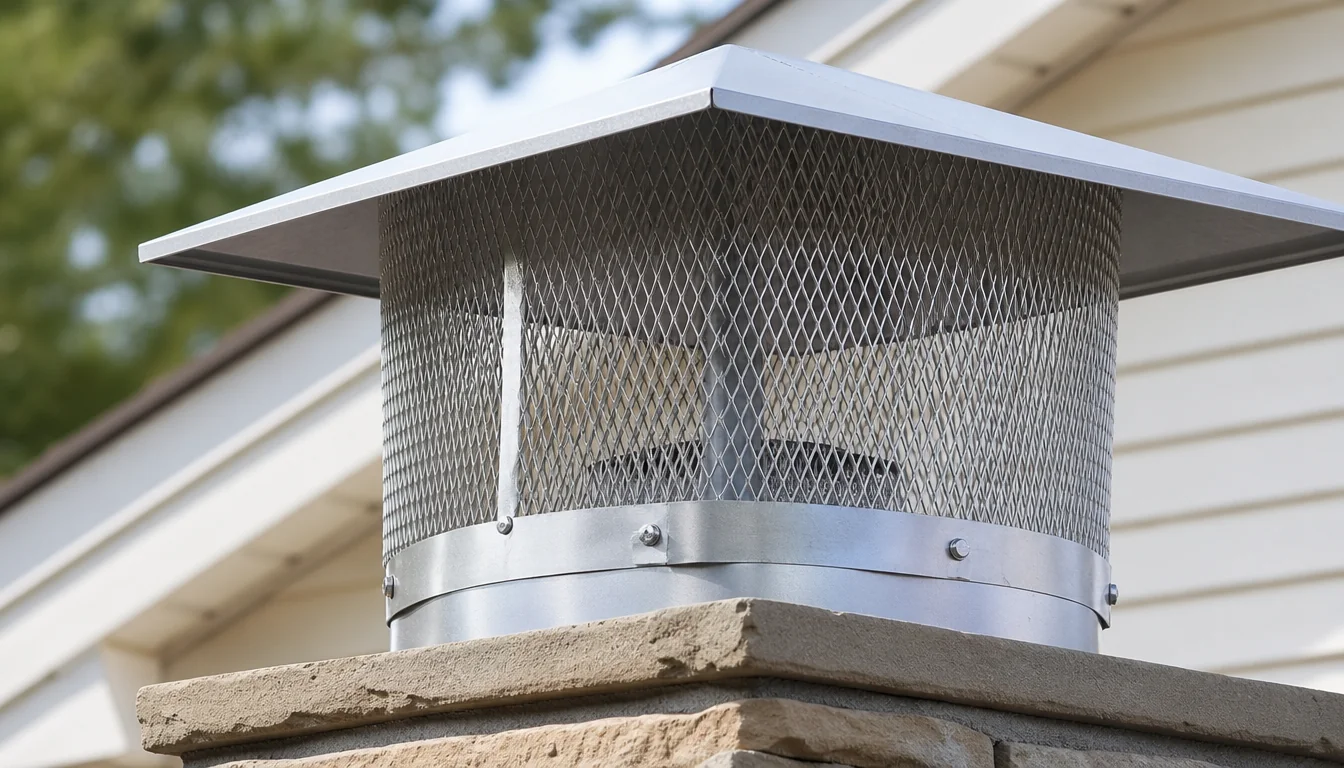
A spark arrestor is a screen on top of the chimney that stops burning embers escaping onto the roof or nearby vegetation. The key detail is the mesh size: openings small enough to catch embers but large enough not to choke the chimney.
This guide explains what the codes say and how to choose.
What the IRC Requires
The International Residential Code, the model code most US states adopt in some form, says that where a spark arrestor is installed on a masonry chimney:
- The net free area of the arrestor must be at least four times the net free area of the flue outlet.
- The screen openings must not permit the passage of a 1/2 inch sphere.
- The openings must not block the passage of a 3/8 inch sphere.
- The screen must be heat and corrosion resistant, and accessible for cleaning.
In plain terms, openings fall between 3/8 inch and 1/2 inch.
What About 5/8 Inch?
California fire rules are commonly cited at a maximum opening of 5/8 inch for spark arrestors. Other wildfire prone areas may set their own rules. The local fire authority or building department decides what applies to your home, so check before buying.
Common Mesh Sizes Compared
| Mesh opening | Typical use | Meets IRC spark arrestor? | Clogging |
|---|---|---|---|
| 3/8 inch | Strict spark control | At the lower limit | Fastest |
| 1/2 inch | Common spark arrestor | Borderline; check openings | Fast |
| 5/8 inch | Cited for California | No under IRC; local rules vary | Moderate |
| 3/4 inch | Standard animal guard | No | Slowest |
Product listings describe mesh in different ways, so read the spec carefully and confirm with your inspector.
Where Are Spark Arrestors Required?
Requirements vary. You are more likely to need one:
- In wildfire prone areas, especially in Western states.
- Under some local fire codes and homeowner association rules.
- Where an insurer asks for one.
- On wood burning chimneys near trees or with combustible roofing.
Gas fireplaces generally do not throw sparks, but many caps for them still have mesh for animals.
Net Free Area: Why It Matters
Fine mesh blocks more of the opening. If the screen is too short or too small, the open area falls below what the chimney needs, and draft suffers. That is why the code requires at least four times the flue area.
How to Check
- Work out the flue area. For a round flue, area = 3.14 x radius squared. For a rectangular flue, width x length.
- Multiply by four.
- Compare with the mesh area of the cap (perimeter x screen height, adjusted for the open percentage of the mesh). Reputable makers design caps to meet the rule for the flue sizes they list.
In practice, buy a cap made as a spark arrestor for your flue size rather than adding finer mesh to a standard cap.
Fine Mesh and Clogging
The trade off with spark arrestors is clogging. Small openings collect creosote, soot and fly ash faster. Clogging is worse with:
- Wet wood.
- Long, low burns.
- Cold exterior chimneys.
How to Manage It
- Burn dry, seasoned wood hot.
- Inspect the screen monthly in heating season.
- Choose a cap with a removable screen for cleaning.
- Have the chimney swept at least yearly, as NFPA 211 recommends.
For more, see the guide to creosote clogging under wood stove caps.
Materials
Spark arrestor mesh should be stainless steel. The IRC calls for heat and corrosion resistant material. Galvanized mesh rusts and breaks down with heat, which opens holes that let sparks through.
Can You Add Spark Arrestor Mesh to an Existing Cap?
Some makers sell replacement screens in spark arrestor sizes for their own caps. Adding hardware cloth or homemade mesh is not a good idea: it is often the wrong material, reduces net free area and may not meet code.
Spark Arrestors on Prefab Chimneys
Factory built chimneys must use the cap listed for that system. Many makers offer a spark arrestor version of their listed cap. Check the installation manual.
Inspecting a Spark Arrestor
Look for:
- Holes or broken wires.
- Gaps between screen and frame.
- Heavy creosote or ash buildup.
- Rust.
Any hole bigger than the mesh openings defeats the purpose.
How to Measure Mesh Opening Size
Product listings describe mesh in several ways, which causes confusion:
- Opening size: the clear gap between wires. This is what codes care about.
- Wire spacing or center to center: includes the wire thickness, so it is slightly bigger than the opening.
- Mesh count: the number of openings per inch.
To check a screen yourself, measure the clear gap between two wires with a ruler or calipers. Under the IRC, a 1/2 inch ball should not fit through, and a 3/8 inch ball should. Some inspectors check exactly this way.
Worked Example: Net Free Area
Take a common 9 x 13 inch outside dimension clay flue tile with an inside opening of roughly 7 x 11 inches.
- Flue area: about 7 x 11 = 77 square inches.
- Required arrestor net free area: 4 x 77 = 308 square inches.
- A cap screen 10 inches tall around a 9 x 13 inch tile has a perimeter of about 44 inches, giving about 440 square inches of screen.
- Mesh is not fully open, because the wires block part of the area. If the mesh is about 70 to 80 percent open, the net free area is roughly 310 to 350 square inches, just over the requirement.
This is why spark arrestor caps tend to have taller screens than standard caps. Figures here are illustrative; use the maker’s specs and your actual flue size.
Spark Arrestors and Wildfire Areas
In wildfire prone regions, embers from chimneys can start grass and brush fires, especially in dry, windy weather. Local fire agencies may:
- Require spark arrestors on all wood burning chimneys.
- Set a maximum opening size.
- Ask for regular inspection and cleaning.
- Restrict burning on high fire danger days.
Even where not required, a spark arrestor is a sensible upgrade for a wood burning chimney near trees, dry vegetation or a wood shake roof.
Spark Arrestors and Insurance
Some insurers ask about chimney caps and spark arrestors, especially in wildfire zones. Ask your agent whether a spark arrestor affects your coverage or premium.
Common Problems with Spark Arrestor Caps
| Problem | Cause | Fix |
|---|---|---|
| Screen clogs quickly | Wet wood, low burns, fine mesh | Dry wood, hotter fires, regular cleaning |
| Smoke spills into room | Clogged or undersized screen | Clean; check net free area |
| Holes in screen | Rust or heat damage | Replace screen or cap |
| Screen comes loose | Fasteners failed | Refasten with stainless hardware |
| Ice on screen | Fine mesh in cold weather | Inspect in cold snaps |
Cleaning a Spark Arrestor
- Wait until the chimney is fully cold.
- Use proper roof safety equipment.
- Remove the screen if the cap allows it.
- Brush with a stiff nylon or stainless brush.
- Check for holes and broken wires.
- Refit and tighten.
During heavy use, check the screen monthly. If it clogs often, look at fuel and burning habits first.
Choosing a Spark Arrestor Cap
Look for:
- Stainless steel body and mesh.
- Opening size that meets your local code.
- Tall screen to keep net free area up.
- Removable screen or lid for cleaning.
- Correct size for your flue.
Ask your local fire or building department what they accept before buying, especially in states with their own rules.
Quick Reference
- IRC opening: blocks a 1/2 inch sphere, passes a 3/8 inch sphere.
- California: commonly cited at 5/8 inch maximum; confirm locally.
- Net free area: at least four times the flue area.
- Material: heat and corrosion resistant, typically stainless.
- Access: screen must be accessible for cleaning.
- Standard 3/4 inch mesh: animal guard only, not a spark arrestor under the IRC.
The Bottom Line
Under the IRC, spark arrestor openings must be between 3/8 and 1/2 inch, with a net free area at least four times the flue. California is commonly cited at 5/8 inch, and local rules decide. Standard 3/4 inch mesh is not a spark arrestor. Choose stainless, buy a cap made for your flue size, and keep the screen clean.
Frequently asked questions
What size mesh is required for a spark arrestor?
Under the IRC, openings must not let a 1/2 inch sphere pass and must not block a 3/8 inch sphere. Some states and local codes differ, so check with your building or fire department.
Is 3/4 inch mesh a spark arrestor?
No. 3/4 inch mesh keeps animals out but does not meet the IRC spark arrestor opening size.
Does fine spark arrestor mesh clog?
Yes. Smaller openings collect creosote and ash faster, especially with wet wood or smoldering fires. Inspect it often during the heating season.