
Chimney Cap Leaking? How to Find and Fix the Water
Key Takeaways
- A leaking chimney cap is usually too small, set too high, bent, loose or clogged.
- Most chimney leaks blamed on the cap actually come from the crown, flashing or porous brick.
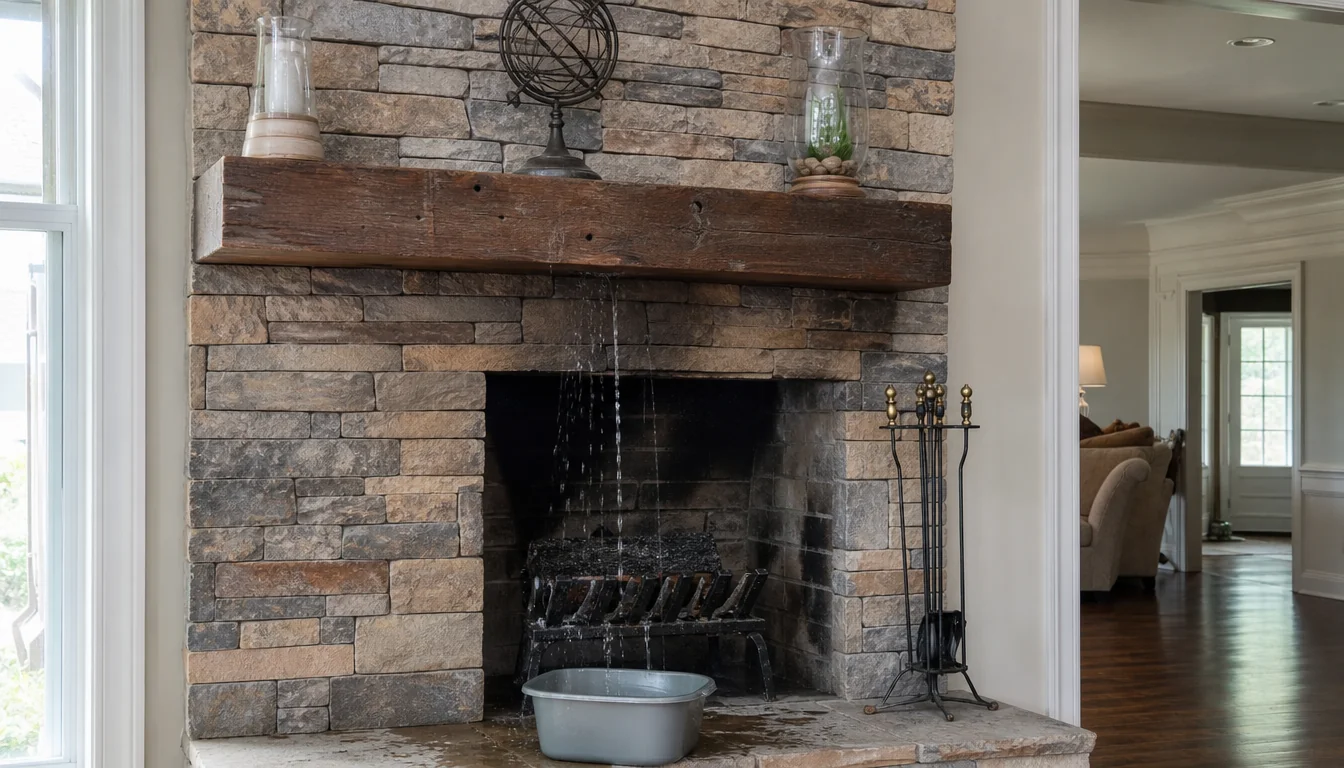
- Water inside the firebox points to the top of the chimney; stains on nearby ceilings point to flashing.
- Fix the cap by fitting the right size with a wide lid; fix the crown, flashing or brick separately.
You put a cap on to keep the rain out, but water is still dripping into the fireplace. Either the cap is not doing its job, or the water is getting in somewhere else. This guide helps you work out which, and fix it.
Is It the Cap or Something Else?
Start by noticing where the water shows up and when.
| Where you see water | When | Most likely source |
|---|---|---|
| In the firebox or on the damper | Any rain | Cap or crown |
| In the firebox | Only in wind driven rain | Cap lid too small or too high |
| Ceiling or wall beside the chimney | Rain | Flashing |
| Attic, on the chimney brick | Rain | Crown or porous brick |
| White powder on brick | Over time | Water soaking through masonry |
| Drips from the cap itself | During and after rain | Bent, clogged or loose cap |
Why a Chimney Cap Leaks
The Lid Is Too Small
The lid should overhang the mesh by several inches on every side so wind driven rain cannot blow through the mesh into the flue. A small lid works in still rain but lets water in during storms.
The Cap Sits Too High
A cap set higher than designed lets rain blow in under the lid.
The Cap Is Crooked or Loose
A cap that has shifted or tilted leaves one side more open. Loose bolts let it move further in wind.
The Cap Is the Wrong Size
An oversized cap sits crooked and leaves gaps. An undersized cap may not cover the flue properly.
The Mesh Is Clogged
Leaves, nests or creosote on the mesh can hold water and let it drip into the flue.
The Lid Is Bent or Holed
Storm damage or a falling branch can bend the lid so it channels water toward the flue. Rust holes in galvanized caps let water straight through.
How to Fix a Leaking Chimney Cap
Step 1: Inspect Safely
On a dry, calm day with fall protection, look at the cap. Check that it is level, tight, the right size, and that the lid is not bent or holed.
Step 2: Tighten and Straighten
Tighten loose bolts evenly so the cap sits centered and level. Gently straighten minor bends in the lid.
Step 3: Clean the Mesh
Remove leaves, nests and creosote.
Step 4: Replace If Needed
If the cap is too small, rusted through or damaged, replace it with the correct size and a wider lid. Stainless or copper will not rust through. Multi flue caps cover the crown too, which helps when the crown is part of the problem.
When the Leak Is the Crown
The crown is the concrete or mortar slab around the flue tiles. Many crowns are built as flat mortar slabs, which crack. Water enters the cracks, freezes, and the cracks grow.
Signs
- Visible cracks or missing pieces on the crown.
- Water in the firebox even with a good cap.
- Damp brick in the attic near the top of the chimney.
Fixes
- Seal hairline cracks with a crown sealer made for masonry.
- Rebuild a badly damaged crown with a proper slope and overhang.
- Fit a multi flue cap that covers the crown.
When the Leak Is the Flashing
Flashing is the metal that seals the joint between the chimney and the roof. It is the most common source of chimney leaks that show on ceilings and walls.
Signs
- Water stains on the ceiling or wall right next to the chimney.
- Leaks during heavy rain, not light rain.
- Visible gaps, rust or failed sealant where the chimney meets the roof.
Fix
Flashing repair is a roofing job. Caulk is only a short term patch.
When the Leak Is the Brick
Old or soft brick and worn mortar absorb water like a sponge. Water travels through the masonry into the chimney.
Signs
- White powder (efflorescence) on the brick.
- Spalling, where brick faces flake off.
- Dark damp patches after rain.
Fix
Repoint failed mortar joints and apply a breathable water repellent made for masonry. Do not use a sealer that traps moisture.
Leaks on Prefab Chimneys
On prefab chimneys, water often enters through a rusted chase cover or a failed storm collar, not the cap. Look for brown streaks on the siding below the chase. Check the chase cover and the seal around the storm collar.
Does a Chimney Cap Stop All Rain?
No cap stops every drop in every storm. A well fitted cap with a wide lid keeps out almost all rain, and a small amount that blows in usually dries out. Puddles or steady drips mean something needs fixing.
A Simple Hose Test to Find the Leak
If you cannot tell where water is coming from, a careful hose test can help. Do it on a dry day with a helper inside watching the fireplace, attic and nearby ceilings.
- Start low. Run water gently on the roof just below the chimney for 10 to 15 minutes. If a leak appears, the problem is the roof, not the chimney.
- Flashing. Move the hose to the flashing on the uphill side of the chimney, then the sides. Water appearing on ceilings or walls points to flashing.
- Brick. Spray the brick faces. Damp patches inside after this step point to porous masonry or mortar.
- Crown. Run water on the crown, avoiding the flue opening. Water in the firebox now points to crown cracks.
- Cap. Finally, spray across the cap from the side to imitate wind driven rain. Water in the firebox now points to the cap.
Work one area at a time and give each one time before moving on. If you are not comfortable on the roof, a sweep or roofer can do this test.
What Water Does Inside a Chimney
Water entering a chimney does more than make a puddle:
- Rusts dampers and metal firebox parts.
- Cracks flue tiles through freeze thaw cycles.
- Washes out mortar joints inside the chimney.
- Mixes with creosote, creating strong odors and acidic residue.
- Rots wood framing around the chimney.
- Stains ceilings and walls.
The longer a leak goes on, the more expensive it gets.
Choosing a Cap That Will Not Leak
If you replace the cap, look for:
| Feature | Why |
|---|---|
| Wide lid overhang | Blocks wind driven rain |
| Correct height | Lid not too high above the flue |
| Correct size | Sits level with no gaps |
| Stainless or copper | Will not rust through |
| Solid fastening | Stays centered in wind |
In very wet or windy areas, a cap with a larger lid or a multi flue cap that covers the crown gives more protection.
Seasonal Checks
- Fall: check the cap, crown and flashing before winter storms.
- After big storms: look for a tilted or damaged cap.
- Spring: look for crown cracks after freeze thaw season.
Include all of these in the yearly chimney inspection that NFPA 211 recommends.
When to Call a Professional
Call a chimney sweep or roofer if:
- You cannot find the source of the leak.
- The crown is badly cracked.
- Flashing is loose, rusted or missing.
- Water has been entering for a long time and you suspect hidden damage.
- You cannot safely get on the roof.
A sweep can inspect inside the flue with a camera to see damage you cannot see from the top.
Temporary Fixes While You Wait
- Close the damper.
- Put a tray or towels in the firebox.
- Cover the flue opening with a tarp only if the fireplace and any connected appliances are not in use.
Never block a flue that serves a working furnace, boiler or water heater.
Quick Checklist
- Note where and when water appears.
- Check the cap is level, tight and the right size.
- Look for a bent lid, rust holes or clogged mesh.
- Check the crown for cracks.
- Look at the flashing for gaps and rust.
- Look for white powder or flaking on the brick.
- On prefab chimneys, check the chase cover and storm collar.
- Fix the cause, then recheck after the next heavy rain.
The Bottom Line
A leaking chimney cap is usually the wrong size, loose, bent or clogged. Fix or replace it with the right size and a wide overhanging lid. If water still gets in, look at the crown, flashing and brick next, because most chimney leaks start there.
Frequently asked questions
Why is water dripping from my chimney cap?
The lid may be too small to block wind driven rain, the cap may sit too high or crooked, or the mesh may be clogged so water collects and drips. Leaks can also come from the crown below the cap.
Can a chimney cap leak?
A cap can let water in if it is the wrong size, bent or loose. A correctly sized cap with a good overhang stops almost all rain.
How do I fix a leaking chimney cap?
Tighten or straighten the cap, clean clogged mesh, or replace it with a correctly sized cap with a wider lid. Then check the crown and flashing.